# Agentic AI Workbench: Practise 90 Days of Delivery Decisions
Reading about a shadow run is not the same as deciding whether to end one. The workbench puts you in the chair, with the consequences shown.
7 min read · Beginner · Lesson 3 of 4 in Practice · Updated 2026-09-24 · By Akash Das
Canonical: https://akash-coded.github.io/aws-bedrock-agentcore-strands/learn/agentic-delivery-simulator/
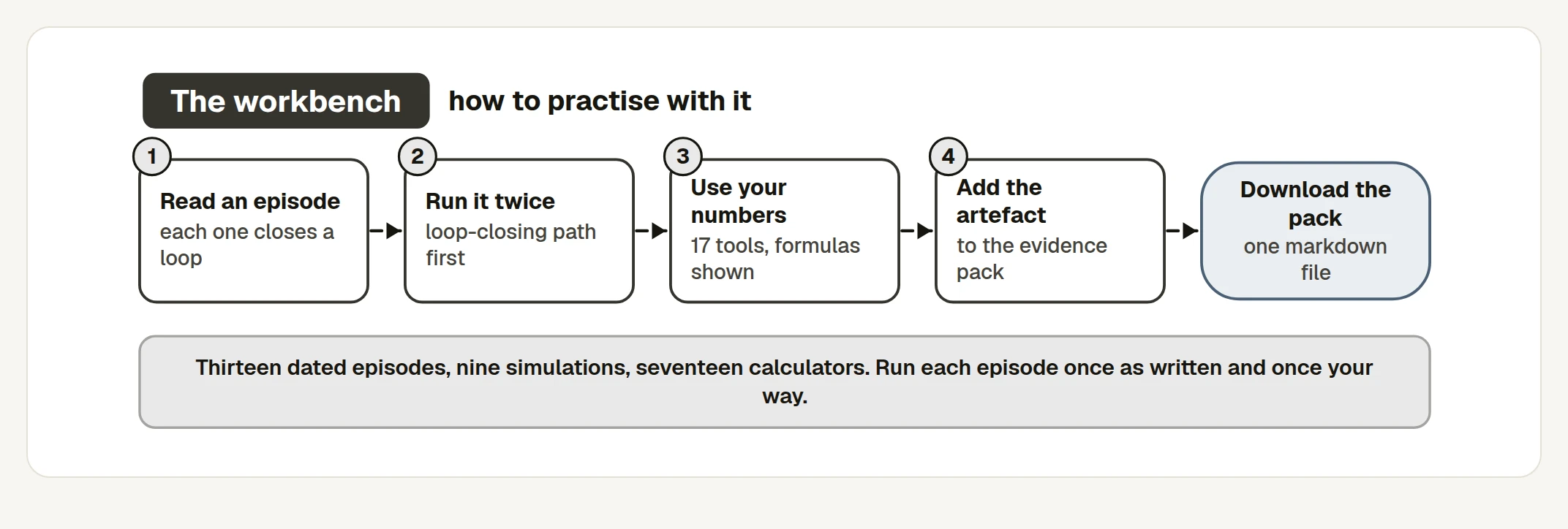
> **In short.** The SkyWays workbench is a free companion to this tutorial that runs entirely in your browser and
> holds thirteen dated episodes of one fictional project. Nine simulations ask for a decision and show
> what each option does to the steps that follow, and seventeen tools open filled in with SkyWays'
> numbers, ready for yours. An evidence pack collects every artefact and downloads as one markdown
> file.
**In this lesson** you'll learn:
- what each part of the workbench is for, with a screenshot of each;
- how to run a simulation so that it teaches something, rather than being won;
- how to take its artefacts into your own project.
## Sound familiar?
- You have read about bars and shadow runs, and never had to make the call with a room watching.
- The last workshop taught a framework with slides, and nothing happened when anyone chose badly.
- Templates arrive empty, and nobody on the team knows what a good one looks like.
The workbench is built for all three: decisions with consequences, and every template filled in first.
## What is the SkyWays workbench?
**One web page, no sign-in, and nothing you type leaves your browser.** It follows SkyWays, this
manual's fictional airline, through the same ninety days as [the case study](https://akash-coded.github.io/aws-bedrock-agentcore-strands/learn/skyways-case-study/),
and every concept in it links to where it is taught, where it is practised and the tool that applies it.
The evidence pack is kept in your browser only.
## Use it, step by step
### Step 1 · Start with the story
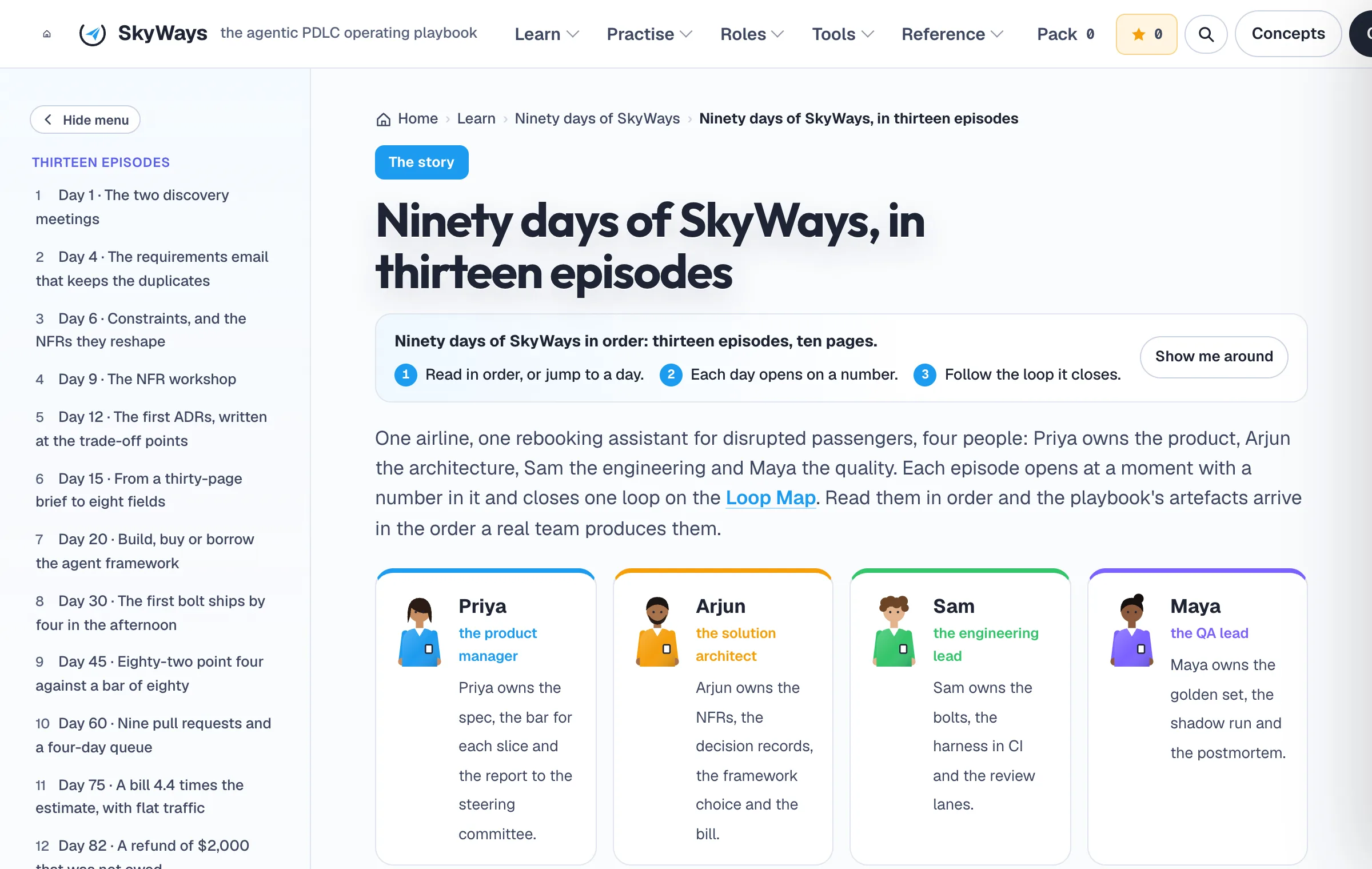
Thirteen episodes, each opening at a moment with a number in it and closing one loop. Read them in
order and the artefacts arrive in the order a real team produces them. [Open the story](https://akash-coded.github.io/aws-bedrock-agentcore-strands/workbench/#/story)
### Step 2 · Run a simulation twice
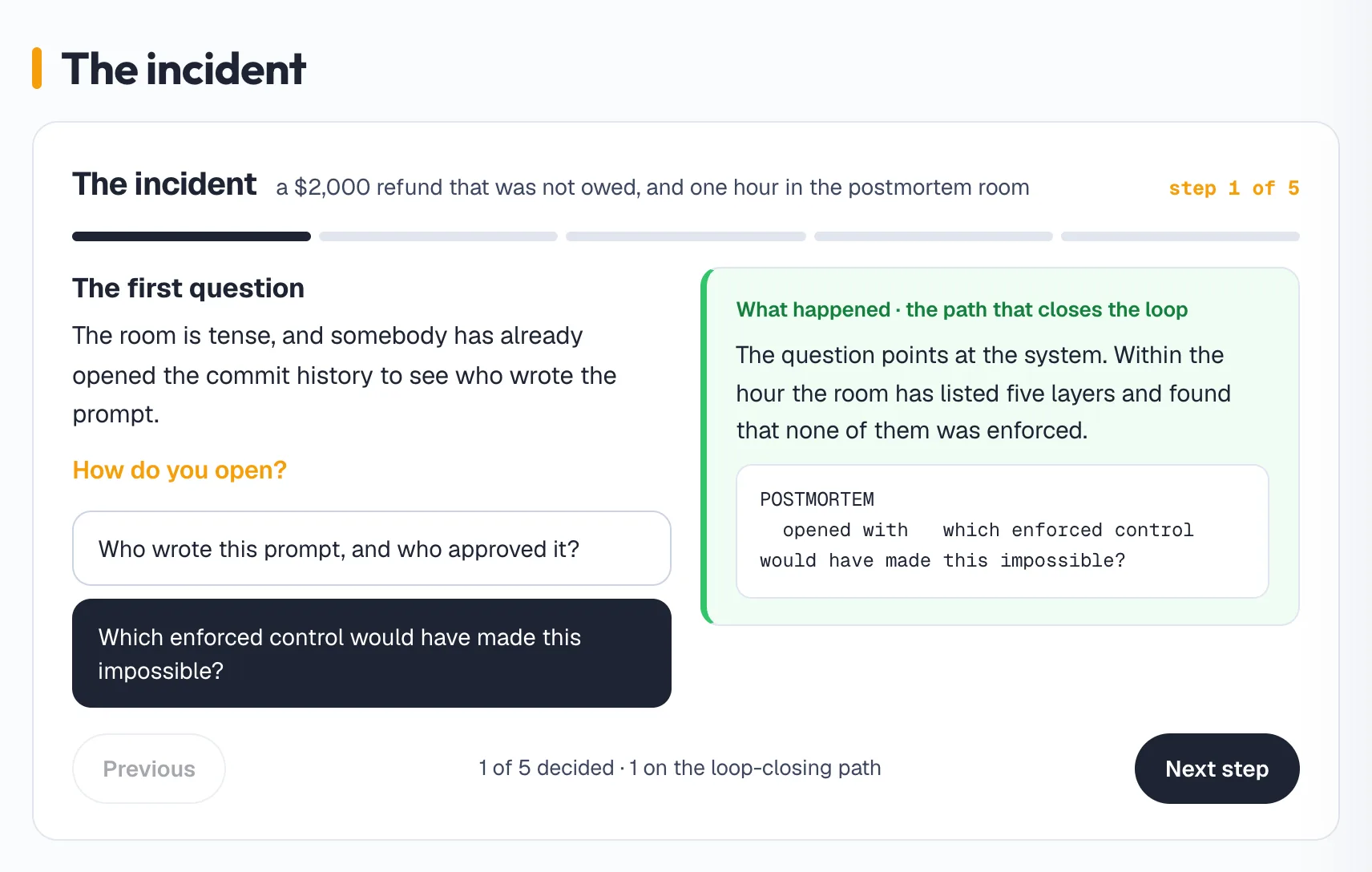
Each of the nine simulations is a sequence of decisions on the SkyWays case, and each option shows what
it does to the steps that follow and the artefact it leaves behind. Run each one twice: once on the path
that closes the loop, and once on the path that feels faster. The second run is where the lesson is.
The nine are the NFR workshop, the paper agent, build, buy or borrow, ninety days of SkyWays, the
six-week deadline, the review bottleneck, the pricing-page walk, the bill blowout and the incident.
[All simulations](https://akash-coded.github.io/aws-bedrock-agentcore-strands/workbench/#/simulations)
### Step 3 · Replace SkyWays' numbers with yours
Every tool arrives filled in, so the result can be read before anything is typed; replace the values
with your project's and the result and the artefact change as you type. Each tool shows the formula or
rule it uses.
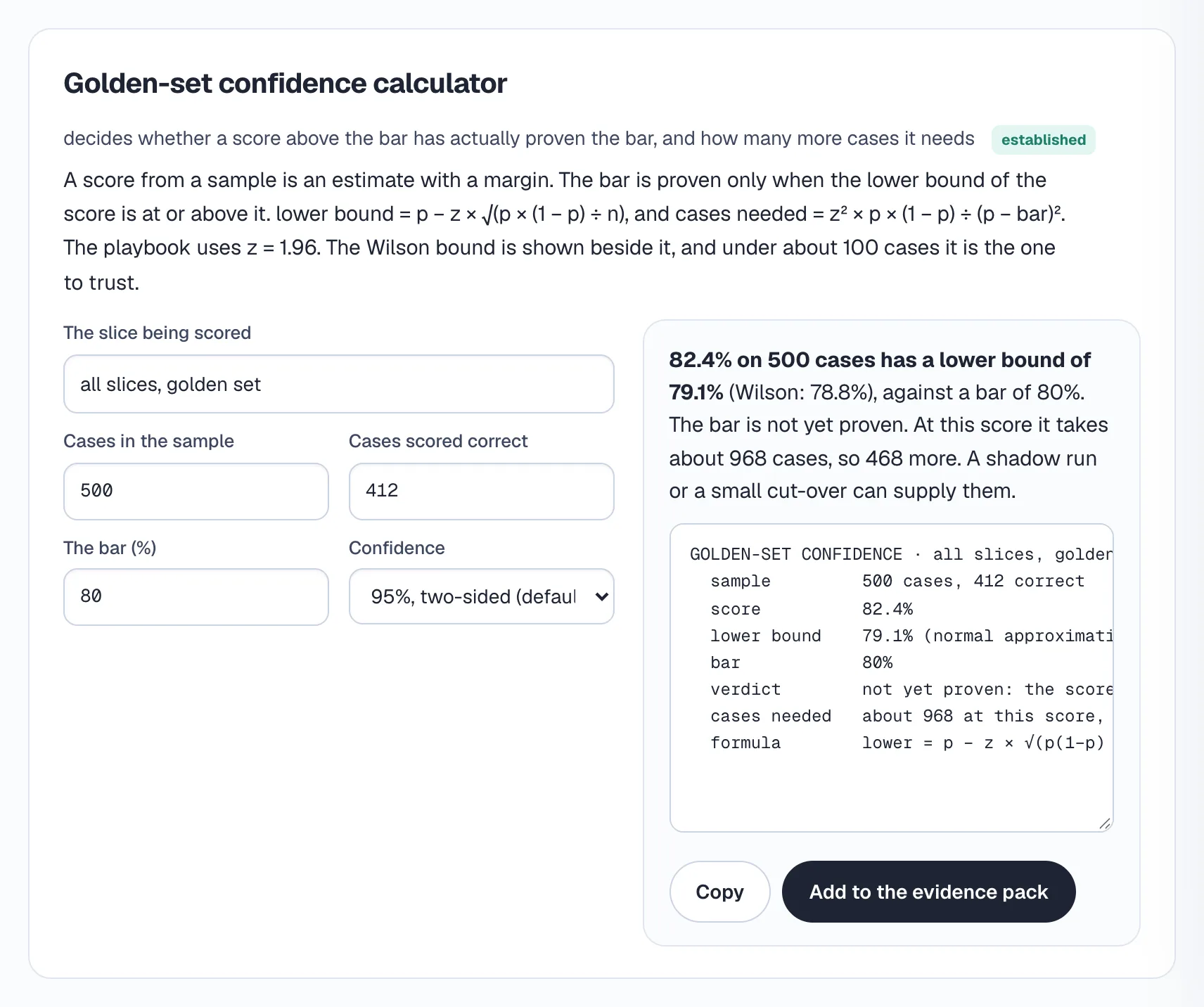
The calculator uses the same rule as this tutorial (**z = 1.96**, the lower end of a two-sided 95%
interval) so SkyWays' 412 of 500 reads 79.1% and 968 cases in both places. It also offers one-sided
bounds, for a team that has chosen one in advance. [The toolkit](https://akash-coded.github.io/aws-bedrock-agentcore-strands/workbench/#/toolkit)
### Step 4 · Keep the Loop Map in view
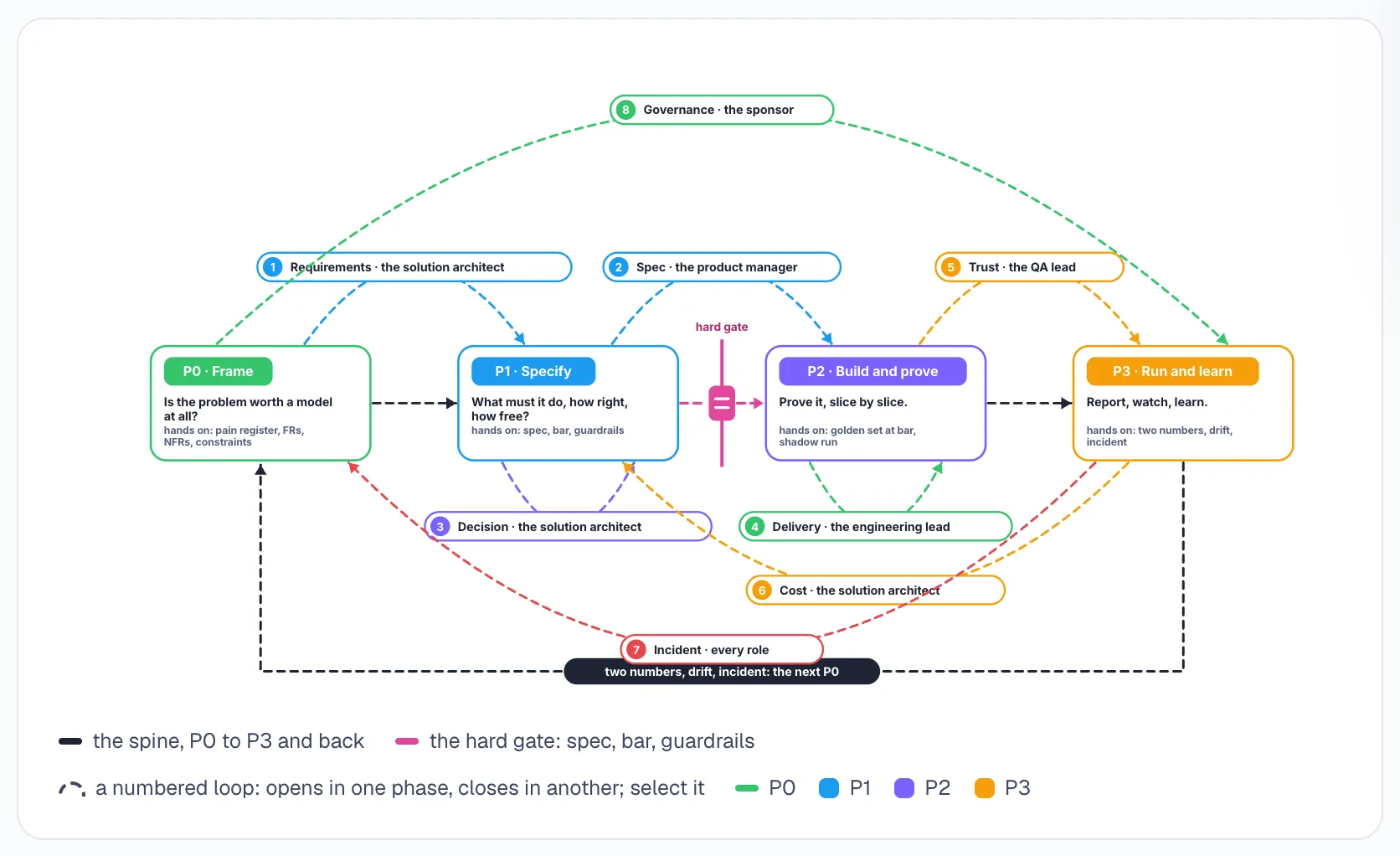
One picture that every page returns to: four phases drawn as a closing loop, the hand-off artefacts
written on the arrows, and the eight loops numbered around it. Select a phase or a loop to see where it
is worked through.
### Step 5 · Collect the evidence pack
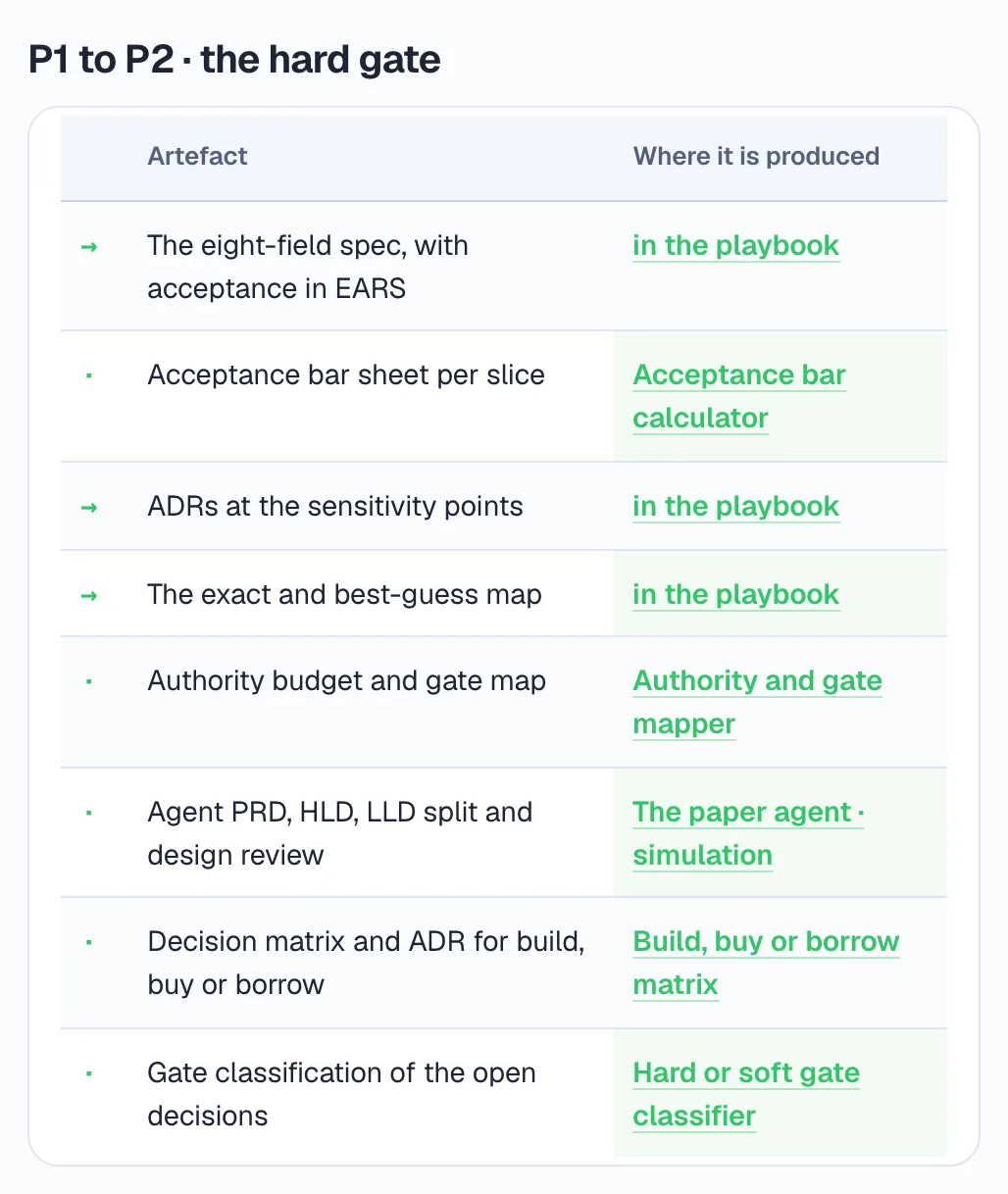
The pack lists the documents that the product manager, the architect and the engineering lead hand to
each other at the four hand-offs, marks the ones you already hold, and downloads as one markdown file
that can go straight into a repository. [The evidence pack](https://akash-coded.github.io/aws-bedrock-agentcore-strands/learn/the-evidence-pack/)
### Step 6 · Go deeper by role
Three playbooks (Solution Architect, Product Manager, and Engineering and QA) walk the same case from
P0 to P3 in eighteen steps each, with the traditional practice and the agentic change side by side. The
workbench's own guide suggests paths by the time you have: a 90-minute briefing, a half-day workshop or a
full day. [How to use the workbench](https://akash-coded.github.io/aws-bedrock-agentcore-strands/workbench/#/guide/g-how)
## Where you'll use it
- **Before a project starts**, as a rehearsal: run the ninety days, then the simulation for your riskiest step.
- **In team training**: one simulation per session, run twice, with the second run argued out loud.
- **On a live project**: open the tool for the artefact you owe next, and replace SkyWays' numbers.
## Why it matters
Decisions are learned by making them. A meta-analysis of 225 studies found that students taught with
active learning outperformed those taught by lecture, and were less likely to fail. The workbench applies
the same idea to delivery: a choice, its consequence, and the artefact it leaves, before the real ones.
## Try it
In the confidence calculator, switch the confidence from the default to **95%, one-sided**. The lower
bound of 412 of 500 rises from 79.1% to 79.6%, and the cases needed fall from 968 to 682. **Did the
evidence change?**
Show the answer
**No: only the convention did.** 0.824 − 1.645 × √(0.824 × 0.176 ÷ 500) = 0.796 is a one-sided 95%
bound; with 1.96 it is 0.791, which is one-sided 97.5%. Cases needed scale with the square of the
constant: 1.96² ÷ 1.645² ≈ 1.42, and 682 × 1.42 ≈ 968. The verdict is the same under both: not yet
proven. Fix the convention before anyone sees a score, and write it on the bar sheet: choosing it
afterwards is how a team talks itself into a launch.